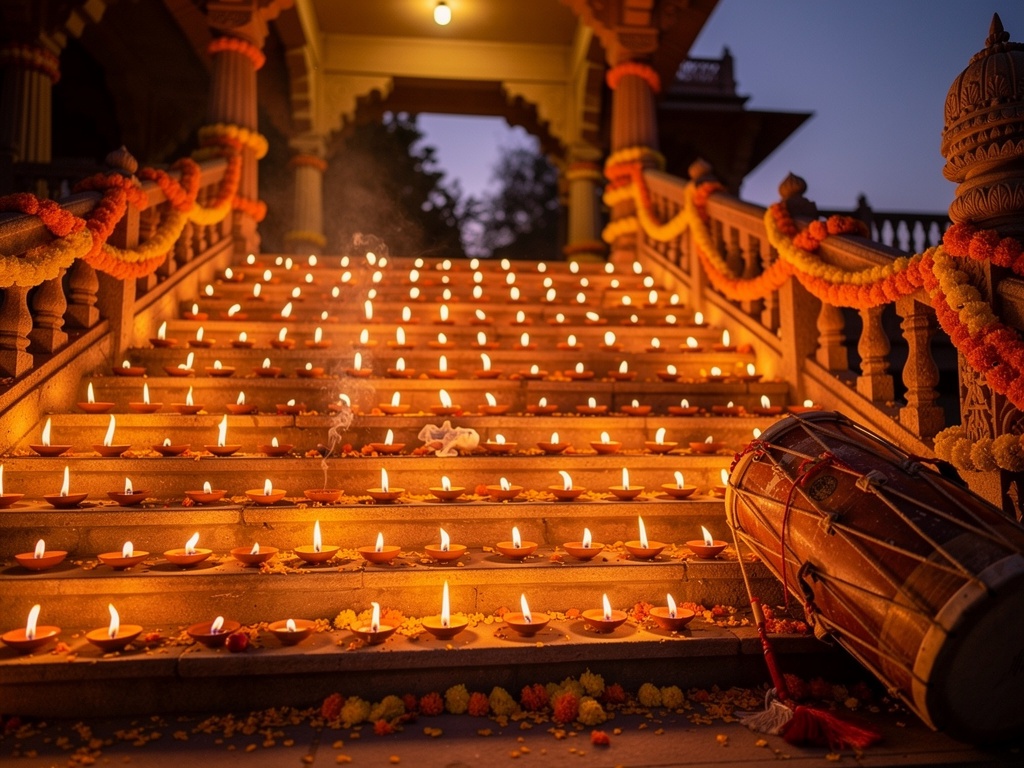
Navratri at Chotila — the honest crowd guide
Twice a year, for nine nights each, the hill becomes a river of lamps and the foothill a fair. Crowds run into lakhs. Here's how the darshan actually works, and who should skip the climb.
When
Two Navratris, two dates
| Navratri | When (approx) | Crowd level |
|---|---|---|
| Chaitra Navratri | Mar–Apr, 9 nights | Very high — lakhs over the festival |
| Sharad Navratri | Sep–Oct, 9 nights | Peak — the biggest of the year |
Exact dates shift with the lunar calendar — check the festival calendar each season.
How it works
The darshan queue, explained
- Tokens: on peak nights, darshan is managed with token counters at the foot. Get your token early, then climb when your slot nears.
- Timing: late night (after midnight) is often calmer than the evening rush. Sunrise is the golden window for a quieter climb.
- The climb: 620–700 steps, lit and crowded — safe but slow. expect the last stretch to move at shuffle pace on big nights.
- Doli: palanquin carriers still operate for those who can't climb, but demand is extreme — book or queue very early.
Who should skip the climb on peak nights
Very young children, anyone with heart or breathing conditions, and elderly pilgrims without a doli. The atmosphere is unforgettable — but the crowd is real, and the doli and accessibility notes apply doubly here.
What to carry
Water, a cap, cash, a small torch, and modest clothes. Leave big bags at the foot. Phone signal is patchy in the crush — agree a meeting point with your group before you start.
Next