Wadhwan — the heritage twin of Surendranagar
Six kilometres from the Junction, Wadhwan is where the district keeps its past: a Rajput-era capital turned painted town, with a palace that catches the evening light, a stepwell you can walk into, and bandhani hands at work since before the railway arrived.
The heritage half-day
Hawa Mahal → Madha Vav → the old town → bandhani
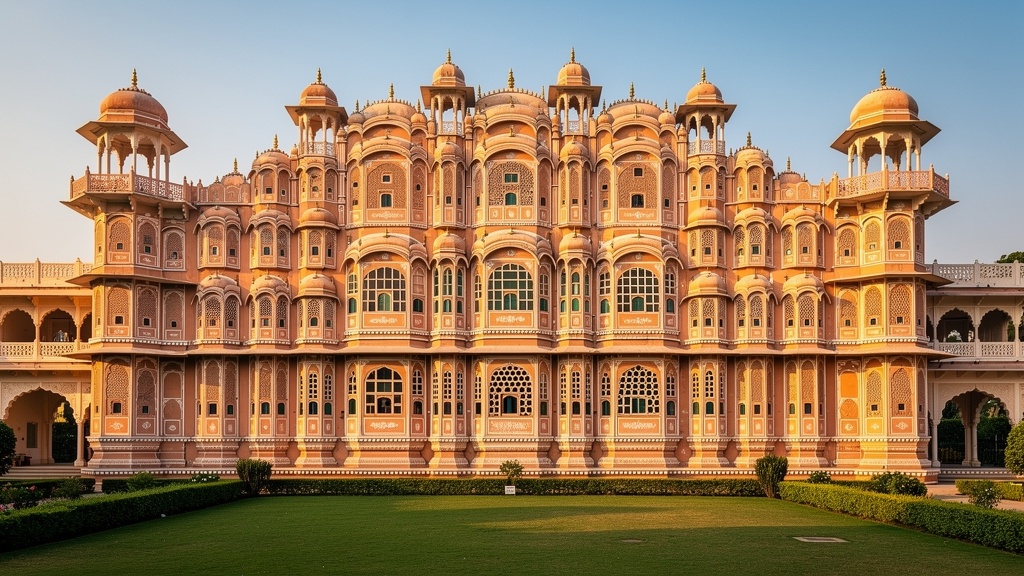
Hawa Mahal is Wadhwan's postcard: an early-20th-century palace with latticed windows and domed pavilions that glow at sunrise and again at sunset. It's a working government building today, so admire the facade and grounds with a caretaker's permission and respect for its use.
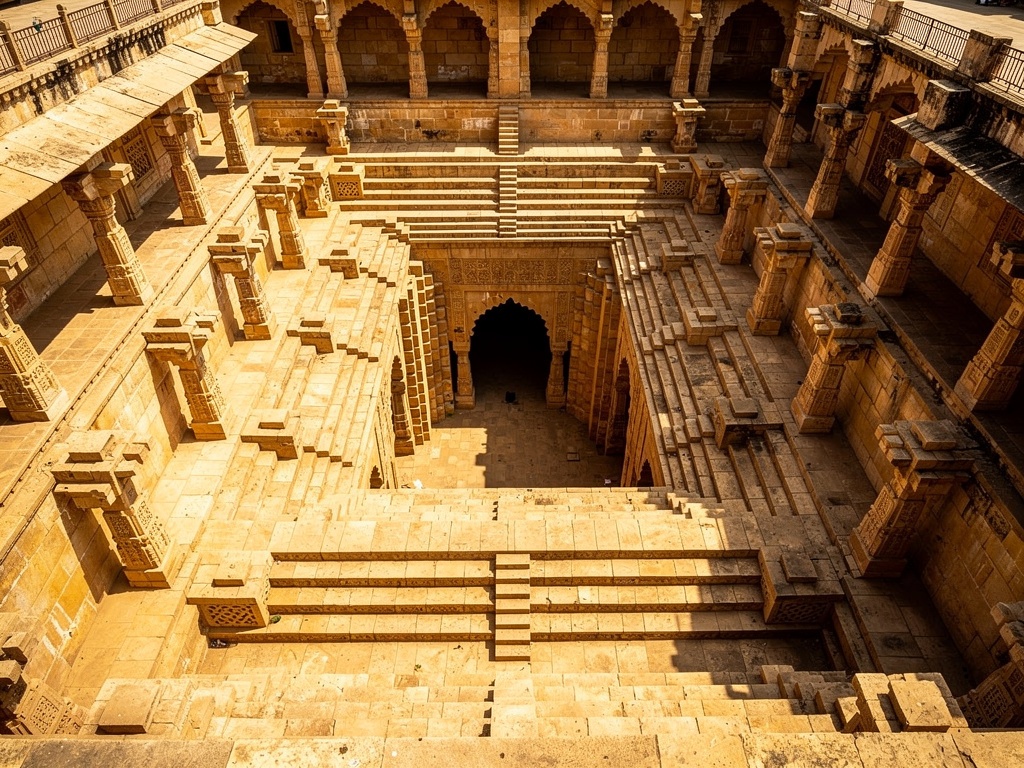
Madha Vav is the quieter gem — a stone stepwell you can actually descend, all carved pillars and cool geometry. It's a 15-minute walk or a two-rupee auto from the palace.
Around both run the old pols and havelis — wooden balconies, painted facades, lanes too narrow for cars — and the bandhani lanes where tie-dye fabric is knotted, dyed and unknotted by hand to this day (see craft trails for where to watch makers).
વઢવાણ એ સુરેન્દ્રનગરનું ઐતિહાસિક જોડિયું શહેર છે — હવા મહેલ, માધા વાવ અને પોળોમાં બનતું ઘરેણું બાંધણી કામ. અડધા દિવસમાં ચાલીને બધું જોઈ શકાય છે.
Practical facts — Wadhwan
- Distance
- ~6 km / 15 min from Surendranagar Junction; auto ~₹80–120, or bus from the city stand
- Time needed
- 2.5–4 hours on foot or by auto
- Hawa Mahal
- Government premises — view from outside; facades best at sunrise/sunset
- Madha Vav
- Open daylight hours; free; descend carefully — stone underfoot can be slippery
- Bandhani lanes
- Wadhwan market & old-town lanes; visits by arrangement with workshops (half-day)
- Best time
- October–February; mornings are quietest
The one-hour route
Your Wadhwan walk
- 00:00 · Hawa Mahal
Facade & grounds
Sunrise or sunset light; 20 minutes, water bottle in hand.
- 00:25 · Walk south
Old-town lanes
Painted facades, pol gates and a hanuman shrine on almost every corner.
- 00:50 · Madha Vav
Descend the stepwell
Take the full staircase to the water line; watch your step.
- 01:20 · Market & bandhani lanes
Watch the dyers
Morning is when the knotted yardage gets dipped. Ask politely at workshops.
- 02:00 · Breakfast or chai
Rules of the town
Khaman, fafda, bhajiya at the market stalls — see eat page.
Context
Why Wadhwan matters — one paragraph
Before 1946 the place you're standing in ran the district: Wadhwan was the capital of the Jhalavad (Zalawad) state under the Zala Rajputs, while "Wadhwan Camp" — the railway settlement across the river — grew up around the station. When the state merged into independent India, the camp won the name, and the old capital kept its walls. Every heritage walk here is a walk through that handover, and through the bazaars that made the town rich enough to paint its facades.
Full history on the Zalawad story page.
Next 3 places